|
|
|
|
|
|
|
|

|
Don't Miss Any Special Deals - Sign Up To Our Newsletter!
| |||||||||||||||
| CLICK HERE FOR A FULL LIST OF ALL NICOLAS TRUDGIAN PRINTS BY TITLE |
|
Nicolas Trudgian Prints  Royal Air Force Royal Air Force  Hurricane Hurricane |
[UP] - Spitfire - Hurricane - Lancaster - Mosquito - Vulcan - Typhoon - Hunter - Kittyhawk - Sopwith Camel - Halifax - SE5a - Gladiator - Bristol - RAF Print List |
Hurricane Royal Air Force Fighter, the Hawker Hurricane had a top speed of 320mph, at 18,200 feet and 340mph at 17,500, ceiling of 34,200 and a range of 935 miles. The Hurricane was armed with eight fixed wing mounted .303 browning machine guns in the Mark I and twelve .303 browning's in the MKIIB in the Hurricane MKIIC it had four 20mm cannon. All time classic fighter the Hurricane was designed in 1933-1934, the first prototype flew in June 1936 and a contract for 600 for the Royal Air Force was placed. The first production model flew ion the 12th October 1937 and 111 squadron of the Royal Air Force received the first Hurricanes in January 1938. By the outbreak of World war two the Royal Air Force had 18 operational squadrons of Hurricanes. During the Battle of Britain a total of 1715 Hurricanes took part, (which was more than the rest of the aircraft of the Royal air force put together) and almost 75% of the Victories during the Battle of Britain went to hurricane pilots. The Hawker Hurricane was used in all theatres during World war two, and in many roles. in total 14,533 Hurricanes were built. |
| Nicolas Trudgian Hurricane Aviation Art Prints, Paintings and Drawings Aviation Art |
|
|
|
|
|
|
| Text for the above items : |
Holding the Line - The Battle of Britain by Nicolas Trudgian. They came across the English Channel at wave top height, their propeller slipstreams leaving wakes on the surface of the water. Nine Dornier Do17Z bombers of 9th Staffel, KG76, detailed to attack the RAF airfield at Kenley as part of Reichsmarshal Goring's prelude to Operation Sealion - the invasion of Britain. Hitler knew that RAF Fighter Command had to be destroyed in the air and on the ground if his plans were to succeed, but the German High Command failed to take into account the resilience of the young Hurricane and Spitfire pilots, and their determination to hold this last vital line of defence. The Dorniers were spotted as they approached the English coast, and Hurricanes were scrambled to intercept. The German bombers cleared the North Downs with feet to spare and spread out into attack formation as they lined up on the hangars at Kenley. As they came in over the airfield Hurricanes of 111 Squadron came diving upon them. Suddenly all hell broke loose. Bombs rained down on to the airfield and buildings went up in flames. One Dornier was brought down and two more, badly damaged by ground fire, were finished off by the Hurricane pilots. Now the chase was on to catch the others before they could escape back to their base in Northern France. Only one of the nine Dorniers that set out would return to base on that 18th day of August, 1940. |
Squadron Scramble by Nicolas Trudgian. Hurricanes of 43 Squadron scramble from an airfield in southern England during the height of the Battle of Britain, 1940. The R.A.F.s first 300mph fighter, the Hurricane proved itself a formidable aerial gun platform, its pilots accounting for four-fifth of all the air victories achieved by the R.A.F. during the Battle of Britain. |
Hurricane Country by Nicolas Trudgian. Released on the 65th Anniversary of the Battle of Britain a new limited edition to commemorate Churchills famous few. Stalwart of the Battle of Britain, the Hawker Hurricane equipped the majority of the RAF squadrons that defended Britain during that epic and decisive air battle in the summer of 1940. At the forefront of the air fighting over the southern counties of England, the young Hurricane pilots of 501 Squadron covered themselves in glory. Nicolas Trudgians painting sets the scene: a victim of yesterdays aerial conflicts, a crashlanded German Ju88 of KG30 lies on the edge of a Sussex field; the attention of two members of the local Home Guard is drawn to the Hurricanes of 501 Squadron as the fighters race back at low-level to Gravesend for fuel and ammunition. Within minutes they will scramble aloft again to rejoin the fray. Published 2005. |
Hurricane Heroes by Nicolas Trudgian. Hurricanes of 87 Squadron return to their West Country base after repelling attacks by Luftwaffe bombers on nearby aircraft factories, August 1940. Flight Lieutenant Ian Gleeds Hurricane, in which he scored 20 victories, leads the Squadron pilots back to base to refuel, re-arm, and get airborne without delay. Published 2000. Signed by three famous Hurricane pilots who fought in the Battle of Britain. These are three fantastic rare signatures to have on one art print and sadly all three have since passed away. |
Tangmere Hurricanes by Nicolas Trudgian. MK1 Hurricanes of No. 601 Squadron refueled and rearmed, climb to rejoin the battle during the summer of 1940. As the great air battle rages high above, life goes in the countryside as a Southern Railway train pulls out of a local village station, capturing the resilient mood of the people. |
Bob Stanford-Tuck Tribute Folio by Nicolas Trudgian. Bob Stanford-Tuck waits at dispersal in his 257 Squadron Hurricane during the Battle of Britain. Promoted to command 257 Squadron, Bob was one of the Battle of Britains leading Aces. |
| Known Aces for this aircraft |
| Ace Name | Victories |
| John Randall Daniel "Bob" Braham | 29.00 |
| Robert Stanford-Tuck | 29.00 |
| Frank R Carey | 28.00 |
| James Harry "Ginger" Lacey | 28.00 |
| Billy Drake | 24.50 |
| Geoffrey Allard | 23.80 |
| William Vale | 22.00 |
| Archibald Ashmore "Archie" McKellar | 21.00 |
| F W Higginson | 15.00 |
| Peter Malam Brothers | 15.00 |
| Robert Francis Thomas Doe | 15.00 |
| Tom Neil | 14.00 |
| Manfred Beckett Czernin | 13.00 |
| Alan Geoffrey Page | 12.50 |
| Joseph Risso | 11.00 |
| George H Westlake | 11.00 |
| Ken Mackenzie | 8.00 |
| Paul Farnes | 8.00 |
| Charles Palliser | 7.50 |
| James Douglas Lindsay | 7.00 |
| Kenneth Lee | 7.00 |
| Bob Foster | 7.00 |
| Wilf Sizer | 7.00 |
| Owen Vincent Tracey | 6.00 |
| Keith Ashley Lawrence | 5.00 |
| John Harry Stafford | 5.00 |
| Hurricane Pilot and aircrew signature details |
  Squadron Leader Cyril Bam Bamberger Our estimated value of this signature : £50 Died : 2008 | Squadron Leader Cyril Bam Bamberger Born in Port Sunlight on May 4th 1919, Cyril Bamberger won an electrical engineering apprenticeship at Lever Brothers in 1934. He joined 610 Squadron AuxAF, in 1936 on the ground staff. Accepted for pilot training with the RAF VR in late 1938, he soloed in mid 1939. Bamberger was called up at the outbreak of war and on the 23rd October 1939 was posted to No 8 EFTS, Woodley and later went to 9 FTS, Hullavington to complete his training. He rejoined 610 (F) Squadron at Biggin Hill on July 27th but with no experience on Spitfires, he was sent to Hawarden for three weeks. Back with 610 (F) Squadron, Bamberger claimed a probable Bf109 on August 28th 1940. He was posted to 41 (F) Squadron at Hornchurch, Essex, September 17th and on October 5th he claimed a Bf109 destroyed. After volunteering for Malta, Bamberger left 41 (F) Squadron in mid-October 1940. He sailed from Glasgow on the Aircraft Carrier HMS Argus. Luckily for him, he did not fly off for Malta with the twelve Hurricanes ad two navigating Skuas which did. Only five of the fourteen aircraft reached their destination. Bamberger eventually reached Malta on November 28th on the destroyer HMS Hotspur, and on arrival he joined 261 Squadron. On January 18th 1941 he destroyed a Junkers JU87 Stuka and another the following day. 261 Squadron was dispended on May 21st 1941. Bamberger moved on the 12th to the newly formed 185 (F) Squadron at Hal Far. He was posted back to England on June 12th and was sent to Central Gunnery School at Sutton Bridge. Commissioned in February 1942, he was posted to Northern Ireland as a Gunnery Officer with the Americans who were converting to Spitfires. In March 1943 Bamberger volunteered for North Africa where he joined 93 Squadron at Hal Far, Malta in May. On July 13th operating over Sicily, he shot down a Junkers JU87 Stuka. In August Bamberger joined 243 Squadron in Sicily as a Flight Commander. He was awarded the DFC (28.09.43). On October 16th Bamberger damaged a Bf109, his first success after 243 crossed into Italy. On May 25th 1944 he claimed a Bf109 destroyed and on June 15th a Macci 202 damaged. Bamberger came off operations in July for medical reasons returning to the UK. He was sent on an instructors course and in early 1945 was posted to the Gunnery School at Catfoss. Awarded a bar to his DFC (14.11.44). Bamberger received it from the King at Buckingham Palace on July 3rd 1945. Released in 1946, Bamberger returned to Lever Brothers and rejoined 610 Squadron at Hooten Park, becoming its CO in 1950. When the Korean crisis came, he was recalled to the RAF. In February 1951 he was granted a permanent commission and in May 1952 moved to an Intelligence Unit, assessing strike capabilities of the Chinese and Koreans. Bamberger retired on January 29th 1959 as a Squadron Leader, and became managing director of a small packaging materials company – he started in 1954. On retirement he had an antique shop in Hampshire. Sadly, Cyril Bamberger passed away on 3rd February 2008. |
  Wing Commander Roland Bee Beamont CBE DSO DFC DL Our estimated value of this signature : £65 Died : 2001 | Wing Commander Roland Bee Beamont CBE DSO DFC DL One of World War IIs great characters, Bee flew Hurricanes with 87 Squadron, later leading a Tempest Wing. He had 8 victories plus a further 32 VIs destroyed. After the war he became a highly respected Chief Test Pilot.Wing Commander Roland Beamont, one of the RAFs top buzz bomb interceptors, was born in Enfield England on August 10, 1920. Educated at Eastborne College, Beamont accepted a short service commission with the Royal Air Force in 1938. He commenced flying in 1939 at the the No. 13 Reserve Flying School at White Waltham. His initial duty was with the Group Fighter Pool at St. Athan where he learned to fly the Hurricane. Beamont was soon posted with the No. 87 Squadron which was part of the Advanced Air Striking Force in France. Seeing action in both France and Belgium prior to the Allied withdrawl, Beamont rejoined 87 Squadron in England during the Battle of Britain. In the spring of 1941 Beamont was awarded the Distinguished Flying Cross after destroying five enemy aircraft. As Commanding Officer of 609 Squadron, Beamont pioneered both day and night ground attack missions utilizing the Typhoon. Beamont was credited with destroying 25 trains in a three month period. He was then made responsible for organizing and commanding the first Tempest Wing at Newchurch. Three days after D-Day Bearnont shot down an Me-109, marking the first aerial combat victory for the Hawker Tempest. In the summer of 1944 Beamont destroyed 32 buzz bombs prior to leading his wing to a Dutch Airfield at Volkel on the Continent. In October of 1944 Beamont was shot down during a ground attack mission over Germany, and he remained a prisoner of war until wars end. Following repatriation Beamont became an experimental test pilot with the Gloster Aircraft Company, which had developed the RAFs first jet aircraft. Turning down a permanent commission with the RAF, Beamont then joined English Electric Company in Wharton as the Chief Test Pilot for the B3/45 (Canberra) jet bomber program. He managed all prototype testing on the Canberra, and in the process set two Atlantic speed records. Later Beamont was involved with the supersonic P1/Lightning program, and became the first British pilot to fly at twice the speed of sound. From 1965 until 1970 he was a founding member of Britains highly succesful Saudi Arabian export program. For several years prior to his retirement in 1979, Beamont was Director of Operations for British Aerospace and Panavia where he was in charge of flight testing for the Tornado. Since his retirement Beamont has authored nine books, and published numerous magazine articles. He is a Fellow of the Royal Aeronautical Scociety and an Honorary Fellow of the Society of Experimental Test Pilots in America. He died 19th November 2001. |
  Air Commodore Peter Brothers CBE, DSO, DFC* Our estimated value of this signature : £65 Died : 2008 | Air Commodore Peter Brothers CBE, DSO, DFC* Learnt to fly at the age of 16 and joined the RAF two years later in 1936. He first saw action in 1940 when as a Flight Commander in 32 Squadron, based at Biggin Hill, he flew his Hurricane against the fighters and bombers of the Luftwaffe. He recalls this as an intensely busy period, during which he shot down an Me109 - his first enemy aircraft; by the end of August that same year his tally of enemy aircraft shot down increased to eight. Awarded the DFC, he was transferred to 257 Squadron where he joined Bob-Stanford Tuck as a Flight Commander. Promoted in 1941 to Squadron Leader, Pete Brothers then took command of 457 Squadron RAAF, equipped with Spitfires. A year later when 457 Squadron returned to Australia, Pete took command of 602 Squadron. In the early autumn of 1942 he went on to become Wing Leader of the Tangmere Wing, succeeding his old friend, Douglas Bader. By the end of the war Pete Brothers had amassed 875 operational hours over a 44-month period. He was credited with having personally shot down 16 enemy aircraft and damaged many more. He later went on to command 57 Squadron during the Malaya campaign. Upon return to the UK Pete Brothers joined the V-Force, flying Valiant-4 jet bombers. He retired in 1973. Sadly, Pete Brothers died 18th December 2008. |
  Group Captain Frank Carey Our estimated value of this signature : £80 Died : 2004 | Group Captain Frank Carey Born 7th May 1912. Frank Carey joined the Royal Air Force n 1927 as a 15 year old apprentice. Carey was first employed as a ground crew fitter and metal rigger but in 1935 Frank carey was selected in 1935 for a pilots course. He was then posted as a sergeant pilot to No 43 Squadron, the Fighting Cocks, whose aircraft he had been servicing. Demonstrating exceptional panache in the Hawker Fury biplane fighter, Carey was selected for the squadrons renowned aerobatics team which took part in many air displays. In early 1939, No 43 Squadron was re-equipped at Tangmere, Sussex, with the eight-gun Hurricane fighter. During World War Two, Frank Carey scored 25 enemy aircraft destroyed, one of the highest Allied fighter pilot totals. Carey opened his account at Acklington in Northumberland, when he shared in the destruction of several Heinkel shipping raiders during the cold winter of 1939-40. This was followed by a short spell at Wick defending the fleet at Scapa Flow before he was commissioned as a pilot officer and posted with No 3 Hurricane Squadron to Merville in France after the German invasion, adding to his total. After six days day of continuous combat, during which he bagged some 14 kills Carey was shot down. He had attacked a Dornier 17 bomber and was following it closely down in its last moments; the pilot was dead but the surviving rear gunner pressed his trigger to set Careys Hurricane alight, wounding him in a leg. The fire stopped, and Carey lwas forced to land between the Allied and enemy lines. Carey managed to get back by hitching a lift with a Belgium soldier on the back of his motorbike until he was picked up by a Passing Army truck which got him to a casualty station at Dieppe, he was put on a Hospital train but the train was attacked by the luftwaffe afer the attack the Engin eDriver had detache dthe train form the carriages and left the wounded. The wlaking wounded managed to push the carriages to the relative safety of La Baule on the coast. Frank Carey along with some other RAF personel managed to obtain a abandoned Bristol Bombay whihc they flew back to Hendon with Carey manning the rear gun. Carey found himself listed as missing believed killed and awarded a DFC and Bar to add to an earlier DFM. He returned to Tangmere just in time for the Battle of Britain. During the Battle of Britain, Carey was shot down during an attack on a large formation of German aircraft, when after several ships had been lost from a Channel convoy during the summer of 1940 Carey and five other Hurricane pilots of No 43 Squadron arrived on the scene to find enemy aircraft stretched out in great lumps all the way from the Isle of Wight to Cherbourg. Frank Carey said about the combat At the bottom were Ju87 dive-bombers; above these Me 109s in great oval sweeps, and above them Me 110s. Three of us got up into them. It was absolutely ludicrous - three of us to take on that mob. At one stage I found himself hooked on to the tail of the last of an echelon of 109s and started firing away quite merrily. Then I had an awful wallop. It was an Me 110 with four cannons sitting just behind me. There was a big bang and there, in the wing, was a hole a man could have crawled through. Carey was slightly wounded by an explosive bullet, then a second Me 110 attacked and caused damage to Carey's rudder; but he managed to return to Tangmere only to be fired at by its anti-aircraft guns. That he managed to land was, he said, a great tribute to the Hurricane. He had been in combat up to six times a day when on August 18, the squadron's losses enabled him to lead No 43 for the first time in an attack on a mixed bunch of fighters and Ju 87 dive-bombers. The fur was flying everywhere, he recalled. Suddenly I was bullet stitched right across the cockpit. Since Tangmere was under attack he turned away and found a likely field for a crash landing at Pulborough, Sussex, where his Hurricane turned violently upside down. he spent some time in hospital. In November 1941 he was posted to Burma with No.135 Sqn when war broke out in the Far East. No 135 was diverted to Rangoon in Burma , , On February 27 1942, Carey was promoted wing commander to lead No 267 Wing, though it could seldom muster more than six serviceable Hurricanes. After destroying several Japanese aircraft he was forced to move to Magwe. As Japanese air raids increased Carey turned the Red Road, the main thoroughfare across the city, into a fighter runway. One advantage, he recalled, was that it was quite possible to sit in Firpos, the citys fashionable restaurant, and take off within three to four minutes. I managed it on several occasions. Early in 1943, Carey formed an air fighting training unit at Orissa, south-west of Calcutta, for pilots who were unfamiliar with conditions and Japanese tactics. In November 1944 he was posted to command No 73 OTU at Fayid, Egypt, in the rank of group captain. Awarded the AFC, Carey returned to Britian as the war ended in 1945, where he was granted a permanent commission and went to teach tactics at the Central Fighter Establishment at Tangmere. After attending the Army Staff College he reverted to the rank of wing commander to lead No 135 Wing, 2nd Tactical Air Force in Germany, where he flew Tempests. Converting to jets, he moved to Gutersloh as wing commander, A succession of staff appointments followed until 1958 he was appointed air adviser to the British High Commission in Australia. Carey, who was awarded the US Silver Star and appointed CBE in 1960, retired from the Royal Air Force in 1962 and joined Rolls-Royce as its aero division representative in Australia, New Zealand and Fiji, retiring in 1972 and moving back the the UK. . Frank Carey died 6th December 2004. |
  Flight Lieutenant Roy Crane Our estimated value of this signature : £50 | Flight Lieutenant Roy Crane Joining the RAF Volunteer Reserve in 1940, Roy Crane was the deferred for nine months before call-up and flying training in the UK and Canada, receiving his Wings and Commission in December 1942. After operational training on Hurricanes, he joined 182 Typhoon Squadron in August 1943. Sorties included dive bombing and fighter escort duties. Transferred to 181 Squadron in April 1944 where worties with cannon and rockets included V1 and V2 sites as well as gun positions, petrol dumps, trains and marshalling yards, etc, in preparation for the invasion. In May this intensified with attacks on heavily defended radar sites along the French coast and shipping strikes. With the invasion a success, 181 Squadron was in the forefront of the Typhoons squadrons attacks on the German ground forces in Normandy, operating from forward airfields in France. On 2nd August 1944 his aircraft was hit by flak at low level and he became a POW. He had completed 71 operational sorties -- Whilst attacking tanks and motorised transport with rockets and cannon in the area of Falaise on 2nd August 1944, my aircraft was twice hit by 40mm flak at low level. I baled out and landed in a very hostile Waffen SS camp, lucky to be quickly rescued by two of the nearby German Air Force gun crew that had shot me down. Later that evening I was taken in an open German staff car by the Oberfeldwebel from the gun crew, a driver and an armed motorcycle escort in the direction of Falaise. We had only travelled a short distance, when about to pass a column of German tanks, they were attacked by six Typhoons firing rockets and cannon. They came round again and again, leaving terrible carnage. This was an ordeal that has to be experienced to be truly appreciated. They finally got me out of the Falaise pocket to Alencon, after which I was eventually taken after intensive interrogation at Oberursal, to Stalag Luft III at Sagan. |
  Group Captain Billy Drake DSO DFC* Our estimated value of this signature : £55 Died : 2011 | Group Captain Billy Drake DSO DFC* Joined the R.A.F. in 1936. His first posting was to 1 squadron flying Furies then Hurricanes and first saw action over France in the Spring of 1940 and was awarded his first DFC by the end of the year. As a Squadron Leader he was sent to West Africa to command 128 Squadron. 1942 saw his commanding 112 squadron in North Africa, in July saw an immediate BAR to his DFC and in December an immediate DSO. Posted to Malta as Wing Commander he won a US DFC in 1943. Back in the UK he now was flying Typhoons in the lead up to D-Day. With Pete Brothers he was sent to the States to attend the US Staff School at Fort Leavenworth. After the war he continued in the R.A.F. serving in Japan, Malaya, Singapore, Switzerland and his final posting as Group Captain RAF Chivenor, Devon. Retired in July 1963. Going to Portugal where he ran a Bar and Restaurant and dealing in Real Estate. In his flying career he accounted for more than 24 enemy aircraft. Sadly, Billy Drake passed away on 28th August 2011. |
  Group Captain Byron Duckenfield AFC Our estimated value of this signature : £50 Died : 2010 | Group Captain Byron Duckenfield AFC Byron Duckenfield started at Flying Training School on 25th November 1935 in a Blackburn B2 at Brough. As a Sergeant, he joined No.32 Sqn at Biggin Hill on 8th August 1936 and flew Gauntlets and Hurricanes. He joined 74 Squadron at Hornchurch on 11th April 1940, flying Spitfires, and on 5th May was posted to 501 Squadron flying Hurricanes at Tangmere. On the 11th of May at Betheniville, he survived a crash in a passenger transport Bombay aircraft in an aircraft in which he was a passenger, While comin ginto land the aircraft at 200 feet the aircraft stalled and the aircrfat fell backwards just levelly out as it histhe ground. 5 of th epassengers were killed when the centre section collapsed and crushed them. Duckenfield was fortunate as he had moved position during the flight. as the two passengers sitting each side of where he was sitting had died in the crash. (it was found later that the Bombay had beeb loaded with to much weight in the aft sectiion. ) recovering in hospital in Roehampton. On 23rd July 1940, he rejoined No.501 Sqn at Middle Wallop, then moved to to Gravesend two days later, scoring his first victory, a Ju87, on the 29th of July 1940. During August and September he scored three more victories. After a spell as a test pilot from 14th September 1940, he was posted to command 66 Squadron on 20th December 1941, flying Spitfires. On 26th February 1942 he took command of 615 Squadron flying Hurricanes from Fairwood Common, taking the squadron to the Far East. In late December 1942 he was shot down in Burma and captured by the Japanese. He remained a POW until release in May 1945. After a refresher course at the Flying Training School in November 1949, he took command of No.19 Squadron flying Hornets and Meteors from Chruch Fenton. After a series of staff positions, he retired from the RAF as a Group Captain on 28th May 1969. Duckenfield would write later his details : Burma At first light, 12 Hurricanes IIC aircraft of 615 Squadron, myself in the lead, took off from Chittagong for central Burma to attack the Japanese air base at Magwe, 300 miles away on the banks of the River Irrawaddy. Arriving at Yenangyaung, we turned downstream at minimum height for Magwe, 30 miles to the South and jettisoned drop tanks. Just before sighting the enemy base, the squadron climbed to 1200 feet and positioned to attack from up sun. On the ramp at the base, in front of the hangers, were 10 or 12 Nakajima KI - 43 Oscars in a rough line up (not dispersed) perhaps readying for take. These aircraft and the hangars behind them were attacked in a single pass, before withdrawing westward at low level and maximum speed. A few minutes later perhaps 20 miles away form Magwe, I was following the line of a cheung (small creek), height about 250 feet, speed aboput 280 mph, when the aircraft gave a violent shudder, accompanied by a very lound, unusual noise. The cause was instantly apparent: the airscrew has disappeared completely, leaving only the spinning hub. My immediate reaction was to throttle back fully and switch off to stop the violently overspeeding engine. Further action was obvious: I was committed to staying with the aircraft because, with a high initial speed, not enough height to eject could be gained without the help of an airscrew. So I jettisoned the canopy and acknowledged gratefully the fact that I was following a creek; the banks of either side were hillocky ground, hostile to a forced landing aircraft. Flying the course of the creek, I soon found the aircraft to be near the stall (luckily, a lower than normal figure without an airscrew) extended the flaps and touched down wheels-up with minimum impact ( I have done worse landings on a smooth runway!) My luck was holding, if one can talk of luck in such a situation. December is the height of the dry season in that area and the creek had little water, it was shallow and narrow at the point where I came down: shallow enough to support the fusalage and narrow enough to support wing tips. So I released the harness, pushed the IFF Destruct switch, climed out and walked the wing ashore, dryshod. The question may occur -Why did not others in the squadron see their leader go down? - the answer is simple, the usual tatctic of withdrawal from an enemy target was to fly single at high speed and low level on parallel courses until a safe distance from target was attained. Then, the formation would climb to re-assemble. Having left the aircraft, I now faced a formidable escape problem? I was 300 miles from friendly territory: my desired route would be westward but 80% of that 300 miles was covered by steep north-south ridges impenetrably clothed in virgin jungle; these were natural impediments, there was also the enemy to consider. Having thought over my predicament, I decided the best I could do - having heard reports of mean herted plainspeope - was to get as far into the hills as possible and then find a (hopefully sympathetic) village. I suppose I may have covered about 15 miles by nightfall when I came upon this small hill village and walked into the village square. Nobody seemed surprised to see me (I suspect I had been followed for some time) I wa given a quiet welcome, seated at a table in the open and given food. Then exhaustion took over, I fell asleep in the chair and woke later to find myself tied up in it. Next day I was handed over to a Japanese sergeant and escort who took me back to Magwe and, soon after that, 2.5 years captivity in Rangoon jail. Sadly we have learned that Byron Duckenfield passed away on 19th November 2010. |
  Wing Commander John Elkington Our estimated value of this signature : £40 Died : 2019 | Wing Commander John Elkington John (Tim) Elkington was born in 1920 and joined the RAF in September 1939. Commissioned as a Pilot Officer in July 1940 he was immediately posted to join 1 Squadron flying Hurricanes atTangmere. On 15 August he shot down an Me109 over the Channel, but the following day he was himself shot down over Thorney Island. He baled out injured and was admitted to hospital, his Hurricane crashing at Chidham. He died on 1st February 2019. |
  Air Commodore John Ellacombe CB DFC* Our estimated value of this signature : £50 Died : 2014 | Air Commodore John Ellacombe CB DFC* John Ellacombe joined the RAF in 1939 and was posted to 151 Squadron in July 1940, immediately converting to Hurricanes. On 24th August he shot down a He111, but a week later his Hurricane was blown up in combat and he baled out, with burns. Rejoining his squadron a few months later, in February 1941 was posted to 253 Squadron where he took part in the Dieppe operations. On 28th July, flying a Turbinlite Havoc, he probably destroyed a Do217. Converting to Mosquitos, John was posted to 487 Squadron RNZAF, and during the build up to the Normandy Invasion and after, was involved in many ground attacks on enemy held airfields, railways, and other targets of opportunity. He completed a total of 37 sorties on Mosquitos. Flying a de Havilland Mosquito XIII with a devastating set of four 20mm cannon in the nose, John Ellacombe flew deep into occupied France on the night before D-Day searching out and destroying German convoys and railway targets. As the Normandy campaign raged on, 151 Squadron intensified its interdiction sorties - including night attacks on Falaise and the Seine bridges. On August 1st Ellacombe took part in the famous attack by 23 Mosquitoes on the German bar-racks in Poitiers, led by Group Captain Wykeham Barnes. Ellacombe had first joined 151 Squadron during the Battle of Britain, direct from Flying Training School. Within weeks he had scored his first victory but also force landed in a field, having shot down a He 111, and baled out of a blazing Hurricane. He baled out a second time during the Dieppe Raid in 1942 but was picked up safely. Postwar he had a long and successful career in the RAE. Air Commodore John Ellacombe, who has died aged 94, survived being shot down three times during the Second World War - twice during the Battle of Britain. On August 15th 1940 the Luftwaffe launched Adler Tag (Eagle Day), with the object of destroying Fighter Command by attacking the ground organisation and drawing the RAF's fighters into the air. Nine Hurricanes of No 151 Squadron were scrambled during the afternoon and met enemy fighters near Dover at 18,000ft. Ellacombe attacked a Messerschmitt Bf 109 and fired three bursts. The enemy fighter rolled on to its back and dived into the sea. There was heavy fighting over the next few days, and on August 24 Ellacombe engaged a Heinkel III bomber. His fire hit its engines and the bomber crash-landed in Essex . During intense fighting on August 30 he attacked a formation of Heinkels head on. He hit one, which crashed, but return fire damaged the engine of his Hurricane and he was forced to land in a field, where a farmer accosted him with a pitchfork. On the following day Ellacombe damaged two Bf 109s before attacking a Junkers 88 bomber. When the Junkers returned fire, setting his Hurricane's fuel tank ablaze, he bailed out. As he drifted to the ground, a member of the Home Guard fired on him. He was then marched to a police station where he was assaulted by a constable who thought he was German. Later in life Ellacombe remarked: In two days, a farmer had attempted to kill me, the Home Guard had shot at me and a policeman had tried to kill me - quite apart from the Germans. I wondered whose side I was on. He received hospital treatment for his burns, and his fighting days during the Battle of Britain were over. After several months convalescing Ellacombe returned to No 151, which had been reassigned to night fighting. Equipped with the Hurricane and the Defiant, the squadron had little contact with the enemy; but Ellacombe developed a reputation for flying at night in the worst weather, and in April 1942 he was awarded a DFC for his service in the Battle of Britain and for showing the greatest keenness to engage the enemy. Posted to No 253 Squadron as a flight commander, he found night fighting dull, and volunteered for daylight operations. He flew in support of the ill-fated raid on Dieppe, and as he attacked a gun battery his aircraft was hit by flak. Ellacombe managed to get over the sea before bailing out and being picked up by a Canadian landing craft. After a rest tour, Ellacombe converted to the Mosquito before joining No 487 (NZ) Squadron, flying low-level intruder missions over France and the Low Countries. He attacked V-1 sites in the Pas de Calais and bombed roads and railways in support of the Normandy landings. He saw constant action attacking targets in support of the Allied armies and during the breakout from the Falaise pocket. After 37 intruder bombing patrols Ellacombe was rested and awarded a Bar to his DFC. He spent the remainder of the war on training duties, but still managed occasionally to take a Mosquito on an operational sortie. The son of an English doctor who had served during the Boer War, John Lawrence Wemyss Ellacombe was born at Livingstone, Northern Rhodesia, on February 28 1920 and educated at Diocesan College (Bishops) in Cape Town. In May 1939 he went to Britain to join the RAF, trained as a pilot and in July 1940 was posted to No 151 Squadron; he had never flown a Hurricane. Post-war he remained in the RAF, most of his flying appointments being in Fighter Command. After service in Aden he led No 1 Squadron, flying Meteor jets, and he commanded the Fighter Development Unit at the Central Fighter Establishment, developing tactics for the Hunter and Lightning . He served in Washington as a liaison officer with the USAF on fighter operations before commanding the RAF flying training base at Linton-on-Ouse, near York. Ellacombe was the senior serving representative at the Defence Operational Analysis Establishment, and on promotion to air commodore in 1968 was appointed Air Commander of Air Forces, Gulf, with headquarters at Muharraq, Bahrain. The withdrawal of British forces from Aden was scheduled for the end of that year, and Muharraq became a key staging post and support airfield . Ellacombe's calm handling of affairs in Bahrain was recognised by his appointment as CB. His final appointment was in the MoD, and he retired in 1973. Ellacombe then became Director of Scientific Services at St Thomas's Hospital in London, and later administrator to the hospital's trustees. A good cricketer and rugby player in his younger days, he played golf three times a week until he was 88, and he was a keen follower of Middlesex CCC. He particularly enjoyed watching his grandchildren play cricket (some of them at county junior level, including a granddaughter who turned out for Essex Ladies). John Ellacombe's wife, Mary, whom he married in 1951 when she was serving in the WRAF, had served on Winston Churchill's staff and been appointed OBE. She died in 2007, and he is survived by their son and two daughters. Air Commodore John Ellacombe, born February 28 1920, died May 11 2014. |
Flight Lieutenant John Golley Our estimated value of this signature : £55 Died : 2000 | Flight Lieutenant John Golley John Golley flew Hurricanes, Spitfires and Typhoons during World War II, commencing his combat flying with fighter sweeps and ground attacks over Northern Europe. During the run up to D-Day his No. 245 Squadron Typhoons were equipped with rockets, specializing in tank-busting in the Normandy Campaign. He has written several best-selling military books including The Day of the Typhoon. He died in December 2000. |
 Group Captain Alec Ingle Our estimated value of this signature : £55 Died : 1999 | Group Captain Alec Ingle Alec Ingle was commissioned in June 1940 and joined 615 Squadron at Drem flying Hurricanes before moving to Croydon during the Battle of Britain. He probably destroyed a Do17 in September; in October he shot down an Me109 and probably two more, and yet another victory in November, at which time he was appointed B Flight Commander. He later commanded 609 Squadron at Manston before leading 124 Wing in 1943 flying Typhoons. He was shot down in September 1943 after his Typhoon blew up in combat with an Fw190. Badly burned, he spent the remainder of the war as a POW in Stalag Luft III. Alec Ingle was awarded the AFC and DFC. Sadly Alec Ingle died on 31st July 1999. |
Flight Lieutenant Sir Archie Lamb KBE CMG DFC Our estimated value of this signature : £50 | Flight Lieutenant Sir Archie Lamb KBE CMG DFC Archie Lamb joined the RAF from the Foreign Office after the outbreak of war. Returning from training in Southern Rhodesia, his troopship Orinsay was torpedoed, and he spent nine days in a lifeboat. Joining 184 Squadron, flying Hurricane rocket-firing fighter-bombers, the squadron converted to Typhoons early in 1944. Flying from Westhampnett, he flew two missions on D-Day. He transferred to 245 Squadron in mid 1944 as a Flight Commander. After the war he returned to the Foreign Office, becoming H.M. Ambassador to Kuwait, and to Norway. |
  Squadron Leader Kenneth Lee Our estimated value of this signature : £50 Died : 2008 | Squadron Leader Kenneth Lee Kenneth Norman Thomson Lee was a Battle of Britain pilot who volunteered for the RAF in 1937. Kenneth Lee joined 111 Squadron at Northolt in March 1939. He was commissioned and went to 43 Squadron at Tangmere. Kenneth Lee flew Hurricanes during the Battles of France and Britain with No.501 Sqn, based at Filton and accumulated 7 victories, the first being when 501 Squadron went to France on May 10th 1940 and Kenneth Lee claimed a Bf 110 destroyed later that day. On the 12th he destroyed a Do 17 and a Bf109. The Squadron flew back from France on June 18th and re-assembled at Croydon on the 21st. On May 27th Kenneth Lee claimed an He111 destroyed and a Do17 on June 6th. While attacking a formation of He111s on June 10th Lee's Hurricane was hit by return fire from one of the He111s and exploded. He took to his parachute and landed at Le Mans. Kenneth Lee damaged a Ju 87 on July 29th and on August 12th destroyed another Ju87. While flying his Hurricane (P3059) Lee was shot down for a second time on the 18th when Oberleutnant Schopfel in an Me109 of III./JG26 shot him down over Canterbury. He was one of four Hurricane of the squadron claimed by Schopfel that day. Kenneth Lee baled out, with a bullet wound in the leg and landed near Whitstable. In October, Lee rejoined 501 Sqn and on the 22nd October he was awarded the DFC. On November 29th Lee was posted to the Special Duties flight at Stormy Down and later transferred as Flight Commander to 52 OTU, at Crosby-On-Eden. In December 1941 Kenneth Lee became Flight Commander with 112 Squadron when he was posted to the Middle East and on the 18th of September 1942 Lee moved to 260 Squadron. On 10th November he destroyed an Mc202. He took control of 123 Squadron at Abadan, Persia in March 1943. In May, Lee with 123 Squadron went to the Western Desert and on July 27th 1943 Lee was shot down for the third time and captured on a dawn raid on Crete. He was taken prisoner of war to Stalag Luft 111 at Sagan and Belaria. Ken Lee left the RAF in late 1945 as a Squadron Leader. Sadly, Kenneth Lee passed away on 15th January 2008. |
  Squadron Leader Arthur Leigh DFC, DFM Our estimated value of this signature : £50 Died : 2004 | Squadron Leader Arthur Leigh DFC, DFM Another RAFVR pilot, The son of a regular soldier, Arthur Leigh was called up at the outbreak of war. After finishing his flying training he was posted to 7 OTU and then on to convert to Spitfires in August 1940. Arthur Leigh flew with 64 Squadron at Leconfield and 72 Squadron at Biggin Hill during the Battle of Britain before transferring to 611 Squadron. Awarded the DFM in September 1941, Leigh had then completed 50 sweeps, had destroyed two Bf 109s, probably destroyed another four and shared in the destruction of a Do 17. After a spell instructing and ferrying Hurricanes from Gibraltar to Cairo, he returned to operations with 56 Squadron flying Typhoons from Manston. He was shot down on his first sweep by flak, near Calais but was picked up by an ASR launch. In late 1943 Leigh was posted to 129 Squadron at Hornchurch and was awarded the DDC on completing his second tour in December 1944, spending the rest of the war as an instructor. He died on 3rd July 2004. |
  Flight Lieutenant Derek Lovell Our estimated value of this signature : £40 Died : 2019 | Flight Lieutenant Derek Lovell Volunteered for the RAFVR in January 1941. He trained in Canada on Tiger Moths and Oxfords. He received his wings in April 1942 and was posted to Central Flying School. Following graduation, he taught Fleet Air Arm trainees on Harvards. He returned to the UK in March 1943 and flew Masters at AFU and Hurricanes at OTU. He taught Lancaster crews fighter evasion prior to posting to 84 GSU to fly Typhoons. He joined 197 Squadron at Needs Oar Point in the New Forest in June 1944 and was involved in close support operations and tactical dive bombing and low level bombing throughout the Normandy campaign and on through to VE-Day. He completed 135 operations and in August 1945 was posted to an OTU to instruct on Typhoons and Tempest Vs. He was demobbed in June 1946 and flew weekends in the VR on Tiger Moths and later Chipmunks. He was called up on the G Reserve in July 1951 and flew Harvards, Spitfire XXIIs and then Vampire Vs. He stood down in September as the Korea situation eased. He passed away on March 1st, 2019. |
  Wng Cmdr Ken Mackenzie Our estimated value of this signature : £50 Died : 2009 | Wng Cmdr Ken Mackenzie Ken Mackenzie flew 2 ops on Hurricanes with No.43 Sqn before joining No.501 Sqn based at Kenley during the Battle of Britain, again on Hurricanes. During his time with No.501 Sqn, he claimed 7 victories, with a further 4 shared and 3 damaged. In the most remarkable of these, Ken was following what he thought was a damaged Me109 down to sea level. Realising the aircraft was not damaged, he deliberately struck the tailplane of the enemy aircraft with the wing of his Hurricane (V6799), forcing his opponent to crash. He was subsequently awarded the DFC on 25th October 1940. After this, he joined No.247 Sqn flying night fighter Hurricanes shooting down 10 aircraft in one year. He was shot down on the 29th of September 1941 after claiming an He111 bomber in a night attack planned to target Lannion airfield in Brittany. Ken was engaged by heavy flak from ground defences and completed this sortie by ditching in the sea. He paddled to shore in his dinghy and was subsequently captured and taken prisoner. Ken MacKenzie was posted to various camps before ending up in Stalag Luft 111, Sagan, and was finally repatriated to the UK in October 1944. He was posted to 53 OTU, Kirton-In-Lindsey on 19th December 1945 as an instructor and on 17th June 1945, posted to 61 OTU, Keevil, as a Flight Commander. After the war on the 1st January 1953, Ken was awarded the Air Force Cross. Retired from the RAF on 1st July 1967 with the rank of Wing Commander. Sadly, Wing Commander Ken Mackenzie died on 4th June 2009 |
  Squadron Leader Jocelyn G P Millard Our estimated value of this signature : £45 Died : 2010 | Squadron Leader Jocelyn G P Millard Volunteering for the RAFVR in August 1939, J G Millard was called up for full time service the following month. Converting to Hurricanes, he was posted to 1 Squadron at Wittering in October 1940, and shortly after transferred to Dougla Baders 242 Squadron at Coltishall. In November he moved to 615 Squadron at Northolt. After the Battle of Britain he spent time as an instructor, going to Canada. He later became Squadron Commander of 35 SFTS. Sadly, Jocelyn Millard passed away on the 10th of May 2010. |
  Group Captain Tom Dalton Morgan DSO, DFC*, OBE Our estimated value of this signature : £75 Died : 2004 | Group Captain Tom Dalton Morgan DSO, DFC*, OBE Tom Dalton-Morgan was born on March 23rd 1917 at Cardiff and educated at Taunton School. He was a descendant of the buccaneer Sir Henry Morgan and the Cromwellian General Sir Thomas Morgan, Thomas Frederick Dalton-Morgan. Tom Dalton-Morgan joined the RAF in 1935, serving with 22 Squadron. Flying the Wildebeeste torpedo bomber, he joined the training staff at the Air Ministry. In April 1940 he applied to return to flying, and was appointed to No.43 Squadron. In June 1940 he was posted to Tangmere as B Flight commander with 43 Squadron, flying Hurricanes, scoring his first victory on 12 July. In action over the Channel he shared in the destruction of a Heinkel bomber, but he was forced to bale out with slight wounds the following day when he destroyed another and then was hit by crossfire. With no badges of rank in evidence - he was wearing pyjamas under his flying suit - he was captured by a bobby who placed him in the cells along with the German bomber crew he had just shot down. Dalton-Morgan resumed flying and was soon back in action, accounting for four more enemy aircraft in the next three weeks. In early September, he shot down three Messerschmitt fighters. After one engagement he was wounded in the face and knee, and had to crash-land. His DFC praised him for displaying great courage when his behaviour in action has been an inspiration to his flight. After the Battle of Britain, Dalton-Morgan's primary task was to train new pilots for service with the squadrons in the south. He was also required to establish a night-fighting capability with the Hurricane, a task he achieved with great success. Few enemy night bombers fell victim to single-seat fighter pilots, but Dalton-Morgan, hunting alone, destroyed no fewer than six. Three of his victims went down in successive nights on May 6-7 1941, when the Luftwaffe embarked on a major offensive against the Clydesdale ports and Glasgow. On June 8th, Dalton-Morgan achieved a remarkable interception when he shot down a Junkers bomber, having made initial contact by spotting its shadow on the moonlit sea. After two more successes at night, he was carrying out a practice interception on July 24th with a fellow pilot when he saw another Junkers. Dalton-Morgan gave chase and intercepted it off May Island. Despite his engine failing and fumes filling the cockpit, he attacked the bomber three times. He had just watched it hit the sea when his engine stopped. Too low to bale out, he made a masterly landing on the water, but lost two front teeth when his face hit the gun sight. He clambered into his dinghy before being rescued by the Navy. In January 1942 he left the squadron to become a Controller. Promoted Wing Commander Operations with 13 Group, he then led the Ibsley Wing, consisting of 4 Spitfire, 2 Whirlwind, and 2 Mustang Squadrons. His final victory in May 1943 brought his score to 17. Briefly attached to the USAAF 4th Fighter Group, with the task of mounting long-range offensive sorties over northern France and providing scouts for the tactical bomber squadrons. After damaging an Me 109 in December, he shot down a Focke Wulf 190 fighter and damaged another during a sweep over Brest. He was awarded the DSO in May 1943, which recorded his victories at the time as 17. He flew more than 70 combat sorties with the group. Promoted group captain early in 1944, he served as operations officer with the 2nd Tactical Air Force. Dalton-Morgan engaged in planning fighter and ground attack operations in support of the campaign in Normandy, then moved to the mainland with his organisation after the invasion. Years after, his CO at the time (later Air Marshal Sir Fred Rosier) commented: It would be impossible to overstate Tom D-M's importance and influence on the conduct of fighter operations for and beyond D-Day. A month before the end of the war in Europe, Dalton-Morgan learned that his only brother, John, who also had the DFC, had been shot down and killed flying a Mosquito. Dalton-Morgan remained in Germany with 2nd Tactical Air Force after the war before attending the RAF Staff College, and becoming a senior instructor at the School of Land/Air Warfare. Later he commanded the Gutersloh Wing, flying Vampire jets, before taking command of RAF Wunsdorf. He was appointed OBE in 1945 and mentioned in dispatches in 1946, the year President Harry Truman awarded him the US Bronze Star. Group Captain Tom Dalton-Morgan, who has died in Australia aged 87, on the 18th September 2004, was one of the RAF's most distinguished Battle of Britain fighter pilots. |
  Air Commodore Micky Mount CBE DSO DFC Our estimated value of this signature : £65 Died : 2002 | Air Commodore Micky Mount CBE DSO DFC Flying Officer Christopher John (Micky) Mount joined NO.602 squadron on August 8th 1940 after a brief conversion course on Spitfires. On August 18th his Spitfire L1005 was severely damaged in combat with JU 87s and BF109s over Ford. Micky was unhurt. he again escaped injury when his Spitfire X4270 was damaged landing at Tangmere. he served in many of the theatres of WW2 and he flew Hurricanes in Malta and North Africa and Wellingtons in the Middle east. Micky retired and lived in Ascot in Berkshire. He died 23rd July 2002. |
  Wing Commander Tom Neil DFC* AFC Our estimated value of this signature : £50 Died : 2018 | Wing Commander Tom Neil DFC* AFC Tom Neil was born on 14th July 1920 in Bootle, Lancashire. Tom Neil (also to become known in the RAF as 'Ginger') joined the RAFVR in October 1938 and began his flying training at 17 E and RFTS, Barton, Manchester. Tom Neil was called up on the 2nd os September 1939 being sent to 4 ITW, Bexhill in early November. On 1st December 1939, he was posted to 8 FTS and on completion of the course he was commissioned and posted to 249 Squadron in May 1940 flying Hurricanes just before the start of the Battle of Britain flying from North Weald. On 7th September 1940, Tom Neil encountered and claimed a Bf109 destroyed. On the 11th an He111, on the 15th two Bf109s and a Do17 destroyed and another Do17 shared, on the 18th an He111 damaged and on the 27th a Bf110 and a Ju88 destroyed, a Bf110 probably destroyed and a Ju88 shared. On 6th October Tom Neil shared a Do17, on the 25th claimed a Bf109 destroyed, on the 27th a Do17 probably destroyed, on the 28th a Ju88 shared and on 7th November a Ju87 and two Bf109s destroyed. He was awarded a DFC on 8 October, but on 7 November, after claiming 3 victories over the North Sea off the Essex coast, he collided in mid-air with Wing Commander Francis Beamish and his aircraft lost its tail. He baled out of his Hurricane unhurt, Beamish force-landing unscathed. Tom received a Bar to his DFC on 26 November, and on 13 December was promoted flight Commander. The squadron was posted to Malta in May 1941, flying off HMS Ark Royal on the 21st. During a summer of frequent scrambles, he claimed one further victory in June, while on 7th October he led a fighter-bomber attack on Gela station, Sicily. He departed the island in December 1941, returning to the UK via the Middle East, South and West Africa, and Canada, finally arriving in March 1942, when he became tactics officer with 81 Group. A spell as an instructor at 56 OTU, before being posted as a flying liaison officer with the 100th Fighter Wing of the US 9th Air Force in January 1944. He managed to get some flying in over France with this unit, claiming a share in 6 aircraft destroyed on the ground before D-Day, and a dozen or so more later, plus a number of other ground targets. In January 1945 he was sent to the school of Land/Air Warfare as an instructor. In March 1945 he was posted out to Burma, where he undertook some operations with 1 Wing, Indian Air Force, to gain experience of the operations in this area. Returning to the UK in April, he resumed instructing at the school until the end of the year. In January 1946 he attended the Empire Test Pilots School, undertaking No.4 short course and No.5 course, a total of 18 months. Posted briefly to Farnborough, he sought a move to Boscombe Down, where he stayed for some 3 years. In 1948 in went to Wright-Patterson AFB, Dayton, Ohio, to take part in the first high altitude pressure suit experiments, as a precursor to the aerospace programme. 1950-51 he was a staff officer at HQ, Fighter Command, while in 1952 he attended the staff college at Bracknell. He was then given command of 208 Squadron in Egypt, which he led until 1956, leaving just before the Suez operation. He returned to the UK to become W/Cdr Operations, Metropolitan sector, until 1958, when he attended the flying college at Manby. He went to the British Embassy in Washington for 3 years from 1959, returning to the Ministry of Defence but retiring from the service as a Wing Commander in 1964. Meanwhile he had added the US Bronze Star to his decorations in august 1947, and an AFC in January 1956. Tom Neil died on 11th July 2018. |
  Wing Commander Geoffrey Page DSO OBE DFC Our estimated value of this signature : £85 Died : 2000 | Wing Commander Geoffrey Page DSO OBE DFC Geoffrey Page was born in Boxmoor on 16th May 1920. Geoffrey Page developed an early interest in aviation, which is not surprising as he had an uncle who flew during the Great War and another uncle was Sir Frederick Handley Page, the great aircraft manufacturer. Page went to Dean Close School in Cheltenham, Glouscestershire, and later went to the Imperial College to study engineering. It was at college he joined the University Air Squadron at Northolt. Two weeks after the outbreak of the Second World War, Geoffrey Page received his call-up papers and joined the RAF with the rank of Acting Pilot Officer and went to Cranwell for advanced training. In May 1940 after a short period of instructing, Page was posted to 66 Squadron, flying Supermarine Spitfires but was almost immediately re-assigned to 56 Squadron where he was to fly the Hawker Hurricane. Whilst as a pilot officer with 56 squadron he took part in the Battles of France and Britain, and had accounted for three kills by the time he was shot down on the 12th August 1940 during the Battle of Britain. Flying behind his commanding officer, who was attacking a large formation of Dornier Do17 bombers, his Hurricane was hit and caught fire. Burning high-octane fuel sprayed into the cockpit, covering Page, resulting in very bad burns to his face and hands. Page parachuted out and his Hurricane crashed into the sea. After being picked up from the sea he was taken to the burns unit at Queen Victoria Hospital in East Grinstead, where he was treated by Sir Archibald MacIndoe, a pioneering plastic surgeon. He spent the next two years in hospital undergoing numerous plastic surgery operations. Both of his hands were burnt down to the bone, and his head had swollen to three times its normal size. Page had also received gunshot wounds to his legs. Page became a founding member of the Guinea Pig Club, where Sir Archibald MacIndoe was elected life time president and Geoffrey Page was its first chairman. In late 1942 he re-joined operations again as a Flight Lieutenant. He joined No.132 Squadron as a supernumerary Flight Lieutenant, before volunteering for service in North Africa, but returned to the UK as the desert heat caused problems on his skin grafts. In July 1943 he won his first DFC. Later in the year he joined 122 Squadron as a Flight Commander, before re-joining No.132 Squadron in January 1944 as Commanding Officer. On 29th April 1944 Page led his squadron to strafe Deelen airfield in Holland, and attacked a Bf110 night fighter that was landing. Despite the odds, the Bf110 shot down two Spitfires, before Page forced the aircraft down and destroyed it. The pilot of the Bf110 was the famous Major Hans-Joachim Jabs, who survived. Page was later promoted Wing Leader of 125 wing, and after another DFC he won the DSO at the end of 1944. Page had achieved his goal of 15 victories (10 solo, 5 shared, and 3 damaged). After the war on a tour of the United States met his wife to be, the daughter of a British Hollywood actor. He left the R.A.F. in 1948 joining Vickers Armstrong. In retirement, Page remained the driving force of the Guinea Pig Club, and also founded the Battle of Britain Trust. This raised more than one million pounds, with which the Battle of Britain memorial was erected overlooking the Straits of Dover. In 1995 he was created an Officer of the Order of the British Empire. Sadly Alan Geoffrey Page DSO, OBE, DFC and Bar died 3rd August 2000. |
  Flt Lt Eric Parkin Our estimated value of this signature : £55 Died : 2008 | Flt Lt Eric Parkin After converting to Hurricanes, Parkin was posted to France to join 501 Squadron. In mid-June the squadron prepared to evacuate France. The squadron reassembled at Croydon on the 21st. In the late evening of July 31st 1940 the squadron took off from Hawkinge to return to Gravesend, but his aircraft had a starting problem and he took off late. Arriving at Gravesend in failing light he undershot the runway and touched coiled barbed wire on the boundary which caused the Hurricane to become inverted. Badly injured he was admitted to Gravesend Hospital, later transferred to Halton and did not rejoin 501 until February 5th 1941. With a non-operational category, he was posted away for an instructors course on April 16th 1941 and was instructing until the end of the war. Sadly, Eric Parkin passed away on 23rd July 2008. |
Sqn Ldr Hugh Parry Our estimated value of this signature : £45 Died : 1990 | Sqn Ldr Hugh Parry Hugh Parry joined the RAF from Northern Rhodesia in December 1939, and after training in England was posted in February 1941 to join 260 Squadron flying Hurricanes. In April he transferred to 266 Squadron flying first Spitfires and then Typhoons. In March 1943 he went to Malta with 601 Squadron on the USS Wasp, flying the Spitfire Vc, where he remained until July. After a spell as a test pilot, he returned to combat with 41 Squadron flying Spitfire MkXIIs. On 24th September 1943 he was shot down near Beauvais and managed to evade capture for the next five months until he was eventually captured by the Gestapo in Paris. After a month in prison he was sent to Stalag Luft III until the end of the war. He died on 31st December 1990. |
Squadron Leader H G Pat Pattison Our estimated value of this signature : £45 | Squadron Leader H G Pat Pattison Joining up in 1940 Pat Pattison graduated for flying in the U.S.A. Returning home he flew Hurricanes in affiliation with Halifaxes of No. 6 (Canadian) Group. Converting to Typhoons, Pat joined No. 182 Squadron supporting the D-Day invasion on ground attack sorties. He was awarded the DFC in January 1945 and completed a total of 111 operational sorties. |
  Tony Pickering AFC Our estimated value of this signature : £45 Died : 2016 | Tony Pickering AFC With the RAFVR just before the war commenced, Tony Pickering joined 32 Squadron at Biggin Hill in July 1940, flying Hurricanes, and in August 1940 to 501 Squadron at Gravesend. In September he was shot down in Hurricane P5200, but unhurt in a duel with an Me109, destroying another 109 a few weeks later. In December he joined 601 Squadron at Northolt. After a spell instructing, he joined 131 as a Flight Commander in February 1943, and later served as a Squadron Commander in the Middle East. Tony Pickering died on 24th March 2016. |
  Wing Commander Jack Rose CMG MBE DFC Our estimated value of this signature : £50 Died : 2009 | Wing Commander Jack Rose CMG MBE DFC Jack Rose was born on January 18 1917 at Blackheath, London, and was educated at Shooters Hill School before studying Science at University College London where he represented the university at rugby. He joined the RAF Volunteer Reserve in October 1938, completing his training as a fighter pilot just before the outbreak of war. With the British Expeditionary force under constant air attack, fighter reinforcements were requested and Jack Rose flew one of the Hurricanes sent to Merville to reinforce No.3 Squadron. He was in action immediately and on the 15th he shared in the destruction of a Messerschmitt Bf109 as the air battle reached its climax. For the next few days the Hurricane squadrons operated at maximum intensity. During the afternoon of the 18th Rose intercepted a lone Messerschmitt Bf110 fighter over Douai and shot it down. A few hours earlier, his elder brother Tommy, of No 56 Squadron, had been shot down and killed in his Hurricane. The following day Rose attacked a Heinkel 111 and closed to within a few yards to shoot the bombers port engine. Oil from the engine covered the windscreen of his Hurricane so he climbed away, slowed the aircraft down to almost stalling speed, loosened his harness, stood on his seat and leant out of the cockpit in an attempt to clean the windscreen. As he did, tracer from an enemy fighter hit his aircraft. Seeing Rose standing in the cockpit, the German pilot claimed he had shot down the Hurricane, but Rose managed to break away. His aircraft was badly damaged but he managed a forced landing at a forward airfield where the aircraft was destroyed. Orders were given to evacuate the Hurricanes on the 20th. Without an aircraft, Rose joined others on a French transport and was flown to England. In the 10 days of the air war, No 3 Squadron lost seven pilots killed with another taken prisoner. A further nine Hurricanes were lost. He formed the new 184 Squadron in 1942, initially on Hurricanes, later Spitfires. In late 1943 the squadron converted to rocket firing Typhoons, and were heavily involved in the build up to D-Day, moving to France in late 1944. He later transferred to the Far East, finishing the war with 3 victories. Leading the rocket-firing Hawker Typhoons of 184 Squadron, Jack Rose swept down on German armour concentrations south of Caen on D-Day, the first of many such sorties over Normandy Constantly on call during the battle, the squadrons targets ranged from enemy armour and convoys, to gun and mortar positions, bridges and railway targets. From June 14, they operated from Advanced Landing Grounds in France, with the enemy close enough to fire at them on landing and take-off. Rose joined his first squadron, No 32, at Biggin Hill flying Hurricanes. In the Battle for France he scored three victories before returning to England to take part in the Battle of Britain. In 1942 he formed 184 Squadron from scratch, leading it until October 1944. He later flew Hurricanes again in the Far East. He left the RAF in October 1945. Sadly, Jack Rose died on 10th October 2009. |
  Wing Commander Wilfred M Sizer DFC* Our estimated value of this signature : £55 Died : 2006 | Wing Commander Wilfred M Sizer DFC* Born on 23rd February 1920, at the outbreak of war Bill Sizer was flying Hurricanes with 213 Squadron, after flying Guantlets with No.17 Squadron. The squadron flew to France in May 1940, where he scored his first victories, before being attacked by five Me109s and shot down. Rejoining his squadron soon after, he took part in the air battles over Dunkirk before again being shot down and escaping back to England. He flew throughout the Battle of Britain. Based at Exeter, on the 11th of August, he shot down a Ju88, and the next day he shot down a fighter escorting a large formation of bombers. As the attacks intensified, the pilots of 213 Sqn fle wup to four patrols a day. On the 15th of August he shot down two Ju87 Stukas. He also shared in the destruction of a Ju88 in October 1940, bringing it down over Beachy Head. He was awarded the DFC for scoring 7 and 5 shared victories. In April 1941 he was posted to join 1 Squadron, and then 91 Squadron. In April 1942 he joined 152 Squadron flying Spitfires, with whom he went to North Africa. In January 1943 he was given command of 93 Squadron and took part in the Sicily landings. While leading 93 Squadron he shot down two Italian fighters and damaged several others. He was awarded a Bar to the DFC. He finished the war with 7 and 5 shared victories. He died 22nd December 2006. |
  Vivian Snell Our estimated value of this signature : £65 Died : 2010 | Vivian Snell Battle of Britain Hurricane pilot with No.501 Sqn. Shot down over Cranbrook on 25th October 1940 while flying Hurricane P2903, bailing out uninjured. During his service life Vivian flew the Fairy Battle with 103 Squadron, later flying the Hawker Hurricane with 151 and 501(F) Squadrons during the Battle of Britain in 1940. Vivian shot down a Bf109E on the 25th October 1940 and was then shot down himself while piloting Hurricane Mk.I serial N2438. After having minor wounds attended to he returned to his squadron and flew through the rest of the Battle of Britain. In 1941 he was flying the American built Douglas DB7 Havoc night fighter with number 85(F) Squadron. He commanded his own Mosquito Squadron towards the end of the War. Vivian was released from the RAF in 1946 with the rank of Wing Commander. He died on 21st February 2010. |
 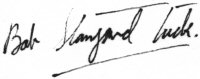 Wing Commander Bob Stanford Tuck DSO DFC** Our estimated value of this signature : £85 Died : 1987 | Wing Commander Bob Stanford Tuck DSO DFC** Bob Stanford Tuck was a flamboyant fighter pilot, his dashing good looks, courage, and success in the air coming to epitomise the young flyers who fought and won the Battle of Britain. To the British public he was a hero in the mould of the knights of old, and today his name is legend. In the early stages of the Battle of Britain Bob fought with 92 Squadron flying Spitfires, quickly becoming one of the leading aces. Promoted to command 257 Squadron, now flying Hurricanes, Bobs dashing style of leadership inspired his pilots to great success. He went on to command the Duxford and Biggin Hill Wings, taking his personal score to 29 air victories before being shot down by ground fire over Northern France in 1942. He died on 5th May 1987. |
  Flight Lieutenant Basil Tatters Tatham Our estimated value of this signature : £60 Died : 2007 | Flight Lieutenant Basil Tatters Tatham Basil Tatham was born on the 13th of March 1921 in Bardolfs, Knebworth and later went to St Edwards in 1936 following many months in Middlesex hospital with osteomyelitis, which nearly cost him his leg. Despite this he went on to follow his father in to the 1st XI cricket team, became captain of shooting, entered the Officer Training Corps and passed his school certificates. After finishing school in 1940 he could have gone on to university but felt duty bound to join the RAF. Basil was training in the Battle of Britain, but served through two tours as a pilot flying Hurricanes, Spitfires, Typhoons and Tempests. Tatters Tatham first flew Hurricanes with 79 Squadron, and then in 1941 on Atlantic convoys with the MSFU before being torpedoed. In May 1942 he was posted to 257 Squadron on Hurricane night fighters, before joining 247 Squadron on Typhoons. After a brief rest period instructing, he rejoined 247 Squadron the day before D-day, and spent the following months destroying German tanks and other ground targets. Basil Tatham ended the war as a Flight-Lieutenant, (he was an acting Squadron Leader) with a number of medals including the Croix de Guerre Avec Etoile de Vermeil (F). He survived being shot down twice. Sadly he passed away on 2nd December 2007. |
  Squadron Leader Laurence Thorogood DFC AE Our estimated value of this signature : £65 Died : 2005 | Squadron Leader Laurence Thorogood DFC AE Joining 87 Squadron on June 14th 1940, Laurence Thorogood was thrown straight into the Battle of Britain, destroying a Ju88 on 25th August. Commissioned in 1941 he then was posted to India and remained in the Far East until the end of the war. He served with No 9 Sqn Indian Air Force (Hurricane IIc) and 67 Sqn RAF (Spitfire VIII) in the campaign down the Arakan Coast. Staying in the RAF after the war, he served in Singapore and Sumatra with 155 Sqn before converting to Vampires on 130 Sqn, after two years instructing on Oxfords at Middle Wallop, we was Adjutant with 615 Sqn, Biggin Hill before moving to Germany in 1951 to fly Vampires with 118 and 94 Sqns. He served on the Thor missile system before finishing his career as a civilian in Whitehall. Sadly Laurence Thorogood passed away in December 2005. We would like to thank Dr John Thorogood for supplying the photo of his father. |
  Group Captain Peter Townsend CVO, DSO, DFC Our estimated value of this signature : £90 Died : 1995 | Group Captain Peter Townsend CVO, DSO, DFC Peter Townsend was one of the most inspirational fighter leaders of the Battle of Britain. In February 1940, flying a Hurricane, he had shot down the first German aircraft to fall on English soil in World War II, and this was the first of a string of successes for the popular commander of 85 Squadron. Shot down twice, wounded, and flying part of the Battle when he couldnt walk, Peter Townsend survived to lead the first night-fighter squadron. He later became Equerry to King George VI, a post he held for 8 years. He died 19th June 1995. |
 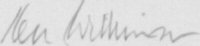 Flying Officer Ken Wilkinson Our estimated value of this signature : £45 Died : 2017 | Flying Officer Ken Wilkinson Battle of Britain pilot flying Hurricanes, he flew Spitfires with 611 Sqn and then 616 Sqn at Kirton-in-Lindsey and 19 Sqn at Fowlmere during 1940 and after a spell instructing returned to operations on Spitfires, with 234 and 165 Squadrons. After spending time with 53, 24 and 10 Operational Training Units, he left the RAF in November 1945 and served in the RAFVR. Ken said : From 1st September 1939 I wrote myself off. I thought, 'you've got no chance' lasting through whatever is going to be. It was quite obvious, in the way the Germans were moving, they were going to make a hell of a war out of it, so I was ready for war. I can remember saying 'we've got to stop this fellow Hitler'. When you think of all the thousands of citizens that were being killed by this absurd bombing. They had to pay for it didn't they. Yes, we lost people. Friends that didn't come back. I don't think we were the sort of people to brood over it, ever. You have to get into an attitude to make sure that you're as cold as a fish. Once someone has failed to return, that's it. Fortune smiled on me and not on some of the others. I can only say that whoever it was who popped off at me, wasn't a very good marksman. It transpired that we were doing something far more important than we thought. As far as we were concerned, it was just that there were some untidy creatures from over the other side of the channel, trying to bomb England and the United Kingdom. And we didn't want them to bomb us. After all, we never asked the Germans to start this nonsense, did we? But they did, and we had to stop them, and we did. It's our country. You die for you country. |
| Hurricane Squadron details |
No.111 Sqn RAF Country : UK Known Codes : , JU, TM, | No.111 Sqn RAF Adstantes - Standing by |
No.112 Sqn RAF Country : UK Disbanded 1st July 1957 Known Codes : , DY, GA, RT, XO, | No.112 Sqn RAF Swift in destruction |
No.126 Sqn RAF Country : UK Disbanded 10th March 1946 Known Codes : , 5J, MK, MT, TD, | No.126 Sqn RAF Persian Gulf Foremost in attack |
No.257 Sqn RAF Country : UK Disbanded 31st December 1963 Known Codes : , DT, A6, FM, | No.257 Sqn RAF Burma Thay myay gyee shin shwe hti - Death or glory |
No.43 Sqn RAF Country : UK Known Codes : , FT, NQ, SW, | No.43 Sqn RAF Gloria finis - Glory is the end |
No.501 Sqn RAF Country : UK Disbanded 10th March 1957 Known Codes : , SD, RAB, ZH, | No.501 Sqn RAF County of Gloucester, City of Bristol (Auxiliary) Nil time - Fear nothing |
No.54 Sqn RAF Country : UK Known Codes : , KL, DL, HF, | No.54 Sqn RAF Audax omnia perpeti - Boldness to endure anything |
No.601 Sqn RAF Country : UK Disbanded 10th March 1957 Known Codes : , UF, HT, YN, | No.601 Sqn RAF County of London (Auxiliary) |
No.602 Sqn RAF Country : UK Disbanded 10th March 1957 Known Codes : , LO, ZT, DU, | No.602 Sqn RAF City of Glasgow (Auxiliary) Cave leonem cruciatum - Beware the tormented lion |
No.610 Sqn RAF Country : UK Disbanded 10th March 1957 Known Codes : , DW, JE, | No.610 Sqn RAF County of Chester (Auxiliary) Alifero tollitur axe ceres - Ceres rising in a winged car |
No.74 Sqn RAF Country : UK Known Codes : , GM, JH, 4D, ZP, | No.74 Sqn RAF Trinidad I fear no man |
No.87 Sqn RAF Country : UK Disbanded 3rd January 1961 Known Codes : , LK, PD, | No.87 Sqn RAF United Provinces Maximus me metuit - The most powerful fear me |
|
Contact Details |
|
Sign Up To Our Newsletter!
This website is owned by Cranston Fine Arts. Torwood House, Torwoodhill Road, Rhu, Helensburgh, Scotland, G848LE Contact: Tel: (+44) (0) 1436 820269. Email: cranstonorders -at- outlook.com |
 |


